


A diversity of farms
Identify different types of farms and practices.
Large-scale farming · market gardening · livestock · mechanisation · organic agriculture · living soils · the carbon footprint of food production

La Ferme de la Taillerie
This autumn, students will plant the first hedgerows and fruit trees, prepare the future vegetable gardens and discover the new 1,000 m² professional greenhouse.
By sowing, planting, tending and harvesting their own crops, students apply regenerative farming practices while building autonomy, teamwork and a direct understanding of how food arrives on their plate.
Chemin de la Taillerie
Until the late 1960s, this land was cultivated. A large kitchen garden supplied a large proportion of the vegetables served in the school cafeteria. A few metres from the barn stood a large metal-and-glass greenhouse. A watercress bed irrigated by a little stream supplied the school with watercress for its soup.
After fifty years as pasture, the land is cultivated once again. The farm taking shape here bridges historic farming knowledge and new approaches to agriculture. The students bring the gardens to life, one by one.
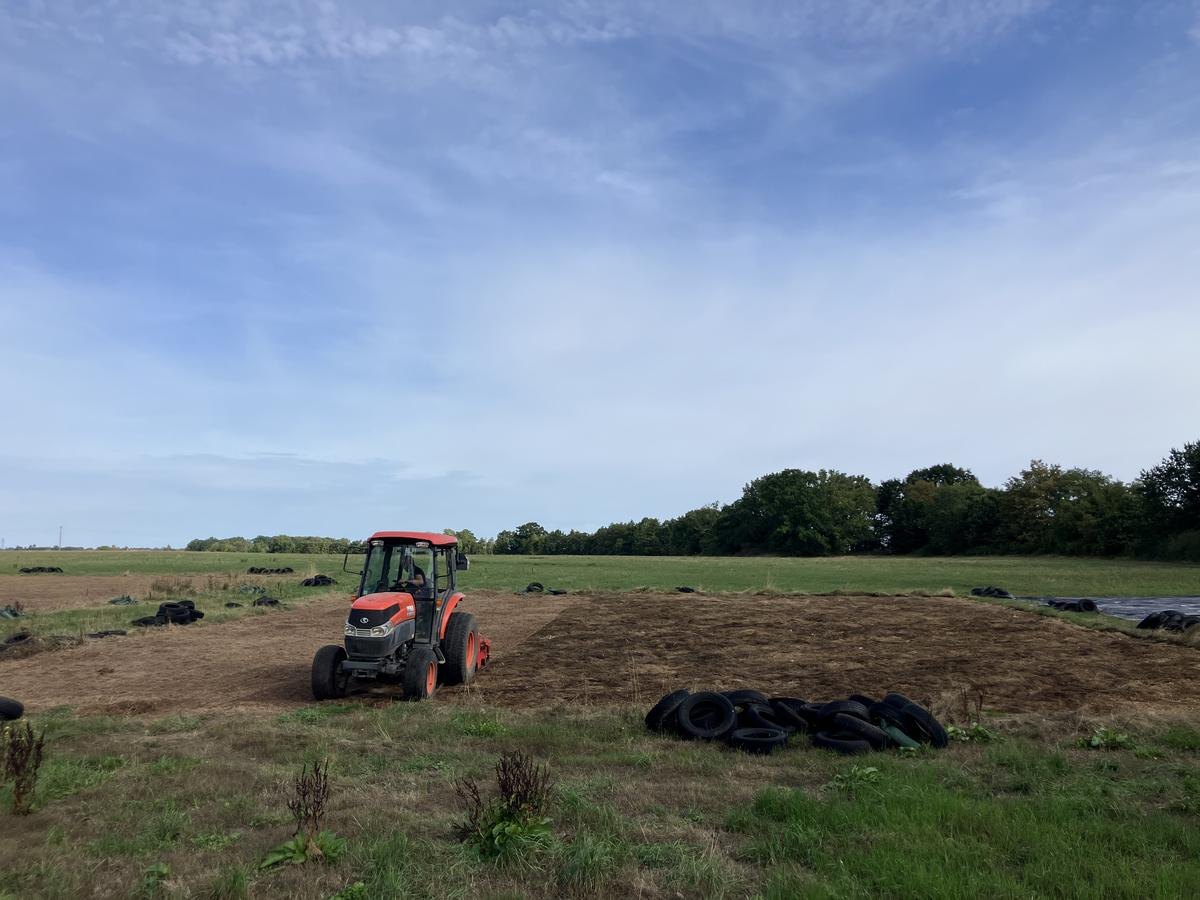
The farm is taking shape season by season. Students are gradually joining the project and taking part in building it.
This calendar is a working framework that will be shaped by the observations and feedback of students on the ground.
Discovering the farming world
In time, the farm will welcome student groups for one-week stays. The students develop practical skills and a deeper understanding of farming. Each day follows a theme.
Identify different types of farms and practices.
Large-scale farming · market gardening · livestock · mechanisation · organic agriculture · living soils · the carbon footprint of food production
Explore the role of water in agriculture and the challenges of managing this essential resource.
Collective water management · soil water-holding capacity · infiltration and permeability · pollution · erosion · micro-irrigation · rainwater harvesting
Discover soil as a living ecosystem, a carbon sink, and the source of fertility.
Soil structure · organic matter and humus · microbiology and mycorrhizae · degradation and regeneration · cover crops · compost · the role of animals
Understand the relationship between agriculture and biodiversity.
Food webs · ecosystem services · pollinators · beneficial insects · the role of hedgerows and Normandy’s bocage
Observe the natural cycles that shape plant life, from seed to harvest.
Seasonality and the crop plan · seeds · germination · flowering · pollination · fruiting · food storage and preservation
Draw the link between agriculture and climate and become stewards of resilient ecosystems.
Rainfall and temperature · microclimates · soil carbon storage · water and heat stress · adaptations in agricultural systems
How a day works
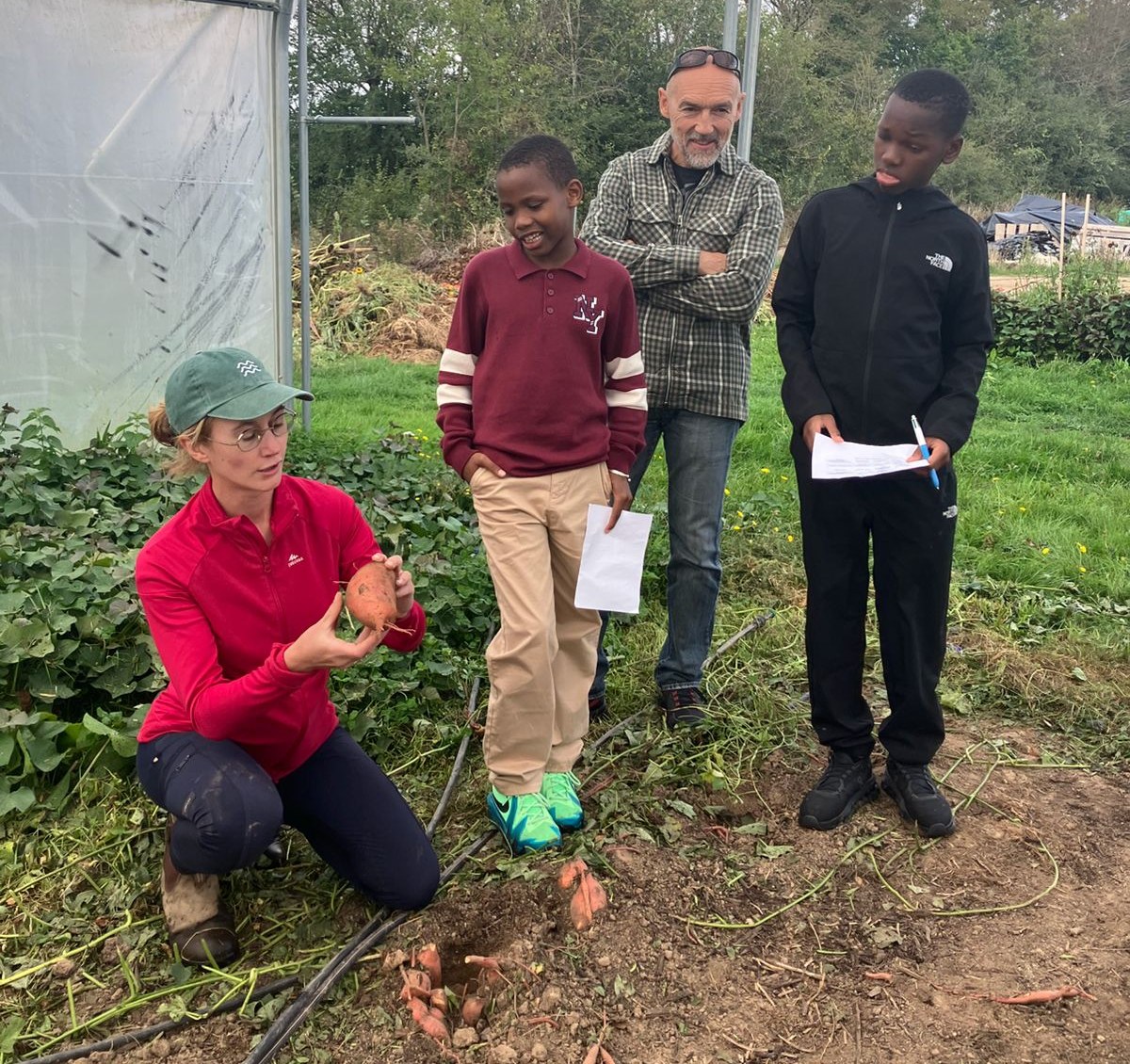
During their week on the farm, students spend time doing hands-on work on the farm. These practical sessions are complemented by three classes: environmental sciences, food systems, and creative practice.
Learning extends beyond the traditional classroom, taking place both indoors and outdoors. Late afternoons remain open for guest speakers, film screenings, sports and free time.
Through the seasons
The school calendar and the farm calendar come together around the rhythm of the seasons.
Autumn harvests, winter sowings, green manures, planting hedgerows and fruit trees, pressing apple juice.
The farm closes at the depth of winter. Time to create the following year’s crop plan, place seed orders, conduct maintenance and repairs.
Sowing seeds in the nursery, plantings in the greenhouse, weeding, trellising and pruning summer crops, harvesting berries and making jam, regular harvests.
The harvest reaches its peak with daily picking through the summer, and the farm welcomes its summer camps.
Organic agriculture
The farm is run on organic and regenerative principles, on land that rested as pasture for fifty years. Official certification with Ecocert France is under way.
La Ferme de la Taillerie